Knowledge Hubs
Discover Insights
All Knowledge Hubs
Explore our extensive collection of research, insights, and educational resources designed to empower the global community.

How Artificial Intelligence is Transforming Modern Businesses in 2026
IntroductionArtificial Intelligence (AI) has evolved from an emerging technology into a fundamental business enabler. In 2026, organizations across industries are leveraging AI to automate repetitive tasks, enhance customer experiences, improve decision-making, and create innovative products and services. From startups to multinational enterprises, AI is no longer a luxury—it has become a strategic necessity for maintaining competitiveness in an increasingly digital world.Businesses are integrating AI into everyday operations, enabling faster processes, reduced operational costs, improved accuracy, and better customer engagement. As AI technologies continue to advance, organizations that embrace intelligent automation are positioning themselves for sustainable growth and long-term success. What is Artificial Intelligence?Artificial Intelligence refers to the ability of computer systems to perform tasks that typically require human intelligence. These tasks include learning from data, recognizing patterns, understanding language, solving problems, making predictions, and supporting decision-making.Modern AI encompasses several technologies, including:Machine Learning (ML)Deep LearningNatural Language Processing (NLP)Computer VisionGenerative AIRobotic Process Automation (RPA)Predictive AnalyticsTogether, these technologies are reshaping how businesses operate and interact with customers. Why AI Matters More Than Ever in 2026Businesses generate massive amounts of data every day. Without intelligent systems, extracting meaningful insights from this data becomes difficult. AI enables organizations to analyze large datasets in real time, uncover trends, predict outcomes, and automate decision-making.Key reasons why AI is becoming essential include:Increasing customer expectations for personalized experiencesGrowing demand for automationRising competition across industriesNeed for faster business decisionsImproved operational efficiencyEnhanced cybersecurity requirementsCompanies adopting AI today are better equipped to adapt to changing market conditions and customer needs. Key Areas Where AI is Transforming Businesses1. Intelligent Customer SupportAI-powered chatbots and virtual assistants provide instant responses to customer inquiries 24/7. These systems can handle thousands of interactions simultaneously, reducing response times while improving customer satisfaction.Benefits include:Faster customer serviceReduced support costsImproved customer engagementMultilingual assistancePersonalized recommendations 2. Data-Driven Decision MakingAI analyzes historical and real-time data to identify business trends and forecast future outcomes.Organizations use AI for:Sales forecastingFinancial planningDemand predictionRisk assessmentBusiness intelligence dashboardsInstead of relying solely on intuition, executives now make evidence-based decisions backed by AI-powered insights. 3. Business Process AutomationRoutine administrative tasks consume valuable employee time. AI automates repetitive processes such as:Invoice processingPayroll managementData entryDocument verificationInventory managementEmail categorizationAutomation allows employees to focus on innovation, strategic planning, and customer relationships. 4. Personalized Customer ExperiencesConsumers expect businesses to understand their preferences.AI enables personalization through:Product recommendationsCustomized marketing campaignsPersonalized email marketingSmart pricing strategiesIndividual customer journeysCompanies delivering personalized experiences often achieve higher customer satisfaction, stronger loyalty, and improved conversion rates. 5. Predictive AnalyticsAI predicts future business events using historical data.Applications include:Customer churn predictionSales forecastingEquipment maintenanceFraud detectionInventory optimizationHealthcare diagnosticsPredictive analytics helps organizations make proactive decisions rather than reacting after problems arise. 6. Cybersecurity EnhancementCyber threats continue to evolve rapidly.AI strengthens cybersecurity by:Detecting unusual network activityIdentifying malwarePreventing phishing attacksMonitoring user behaviorResponding to threats in real timeAI-powered security systems significantly reduce the risk of data breaches. 7. Smart ManufacturingManufacturing industries are embracing AI to improve production efficiency.AI applications include:Predictive maintenanceAutomated quality inspectionRoboticsSupply chain optimizationProduction schedulingThese improvements reduce downtime while increasing product quality. 8. AI in HealthcareHealthcare organizations are using AI to improve patient care.Examples include:Disease diagnosisMedical image analysisDrug discoveryPersonalized treatment planningHospital resource managementAI assists healthcare professionals by providing faster and more accurate clinical insights. 9. Financial ServicesBanks and financial institutions rely on AI for:Fraud detectionCredit scoringAutomated customer serviceInvestment recommendationsRisk managementRegulatory complianceAI enables secure, efficient, and personalized financial services. 10. Human Resource ManagementHuman Resources departments increasingly use AI for:Resume screeningCandidate matchingEmployee performance analysisWorkforce planningLearning recommendationsThis improves hiring efficiency and enhances employee development. Benefits of AI for Modern BusinessesOrganizations adopting AI experience numerous advantages, including:Increased productivityReduced operational costsFaster decision-makingBetter customer experiencesImproved accuracyEnhanced securityGreater scalabilityCompetitive advantageInnovation accelerationHigher profitability Challenges of AI AdoptionDespite its advantages, businesses must address several challenges when implementing AI.Data PrivacyAI systems require large volumes of quality data while complying with privacy regulations.High Initial InvestmentDeveloping AI solutions may require investments in infrastructure, software, and skilled professionals.Skills GapOrganizations often face shortages of AI engineers, data scientists, and machine learning specialists.Ethical ConcernsBusinesses must ensure fairness, transparency, accountability, and responsible AI usage.Integration ComplexityIntegrating AI with existing enterprise systems can be technically challenging. Future AI Trends in BusinessSeveral emerging trends are expected to shape AI adoption over the coming years.Generative AI ExpansionOrganizations will increasingly use generative AI for content creation, software development, customer support, and design.AI-Powered AutomationMore business operations will become autonomous through intelligent automation.Explainable AI (XAI)Organizations will prioritize AI systems that provide transparent and understandable decision-making processes.Edge AIProcessing AI models closer to devices will improve speed, security, and reliability.AI and IoT IntegrationSmart devices connected through the Internet of Things will become increasingly intelligent using embedded AI.Responsible AIBusinesses will focus on ethical AI development, bias reduction, data governance, and regulatory compliance. How Businesses Can Successfully Implement AIOrganizations planning AI adoption should follow these best practices:Identify clear business objectives.Start with high-impact AI use cases.Invest in quality data management.Choose scalable AI technologies.Train employees on AI adoption.Monitor AI performance regularly.Ensure compliance with security and privacy regulations.Continuously optimize AI models.A phased implementation strategy minimizes risks while maximizing business value. ConclusionArtificial Intelligence is redefining the way organizations operate in 2026. From automating repetitive tasks and enhancing customer engagement to enabling predictive analytics and strengthening cybersecurity, AI is helping businesses become more agile, efficient, and innovative.Organizations that strategically embrace AI can improve operational performance, reduce costs, and deliver exceptional customer experiences while remaining competitive in a rapidly evolving digital landscape. As AI technologies continue to mature, businesses that invest in responsible adoption, workforce development, and continuous innovation will be well positioned to lead the next generation of digital transformation.Whether you are a startup or an established enterprise, now is the time to explore how Artificial Intelligence can transform your business and create sustainable value for the future.
Explore Hub
Sep 01, 2026

Why Data Science is the Backbone of Digital Transformation
IntroductionDigital transformation has become a strategic priority for organizations seeking to remain competitive in an increasingly technology-driven world. Businesses across industries are modernizing their operations by adopting cloud computing, Artificial Intelligence (AI), automation, the Internet of Things (IoT), and advanced analytics. However, at the core of every successful digital transformation initiative lies one essential discipline—Data Science.Data Science empowers organizations to convert vast amounts of raw data into actionable insights, enabling smarter decisions, personalized customer experiences, operational efficiency, and continuous innovation. Without a robust data strategy, digital transformation efforts often struggle to deliver measurable business value.In today's data-driven economy, companies that effectively leverage Data Science can identify emerging trends, predict future outcomes, optimize business processes, and gain a significant competitive advantage. What is Data Science?Data Science is an interdisciplinary field that combines statistics, mathematics, programming, machine learning, and domain expertise to extract meaningful insights from structured and unstructured data. It involves collecting, cleaning, analyzing, visualizing, and interpreting data to solve complex business problems.A typical Data Science workflow includes:Data collectionData cleaning and preprocessingExploratory data analysisFeature engineeringMachine learning model developmentData visualizationPredictive analyticsBusiness decision supportBy transforming raw information into knowledge, Data Science enables organizations to make informed, evidence-based decisions. Understanding Digital TransformationDigital transformation is the process of integrating digital technologies into every aspect of an organization to improve business operations, customer experiences, and organizational performance.It involves technologies such as:Artificial Intelligence (AI)Cloud ComputingInternet of Things (IoT)Big Data AnalyticsRobotic Process Automation (RPA)BlockchainCybersecurityBusiness IntelligenceEdge ComputingWhile these technologies drive innovation, they all depend on high-quality data and intelligent analysis. This is where Data Science becomes indispensable. Why Data Science is the Foundation of Digital Transformation1. Data-Driven Decision MakingModern businesses generate enormous amounts of data from websites, mobile applications, social media, customer interactions, sensors, and enterprise systems. Data Science helps organizations process and analyze this information to support faster and more accurate decision-making.Instead of relying on assumptions or intuition, executives can use predictive models and real-time dashboards to make strategic business decisions backed by evidence. 2. Enhancing Customer ExperienceCustomer expectations continue to evolve. Organizations use Data Science to better understand customer behavior, preferences, and purchasing patterns.Applications include:Personalized product recommendationsCustomer segmentationBehavior analysisRecommendation enginesTargeted marketing campaignsCustomer lifetime value predictionChurn predictionThese insights enable businesses to deliver personalized experiences that improve customer satisfaction and loyalty. 3. Predictive AnalyticsOne of the most valuable contributions of Data Science is its ability to forecast future outcomes using historical and real-time data.Businesses use predictive analytics for:Sales forecastingDemand predictionInventory optimizationEquipment maintenanceFinancial planningFraud detectionHealthcare diagnosisWorkforce planningPredictive analytics helps organizations become proactive rather than reactive, reducing risks and improving operational efficiency. 4. Improving Operational EfficiencyDigital transformation focuses on streamlining business processes, and Data Science plays a key role in identifying inefficiencies.Organizations can optimize:Supply chain managementManufacturing processesInventory controlResource allocationWorkforce productivityLogistics operationsEnergy consumptionBy analyzing operational data, businesses can reduce costs, eliminate bottlenecks, and improve productivity. 5. Supporting Artificial Intelligence and Machine LearningArtificial Intelligence relies heavily on Data Science. Machine learning models require clean, high-quality data to learn patterns and make accurate predictions.Data Science provides:Data preprocessingFeature engineeringModel trainingModel evaluationContinuous monitoringPerformance optimizationWithout Data Science, AI systems cannot deliver reliable business outcomes. 6. Business Intelligence and ReportingExecutives require accurate information to monitor organizational performance.Data Science powers Business Intelligence (BI) platforms by providing:Interactive dashboardsKPI monitoringReal-time analyticsTrend identificationExecutive reportingFinancial analysisThese insights help leaders make informed strategic decisions quickly. 7. Fraud Detection and Risk ManagementFinancial institutions, insurance companies, and e-commerce platforms use Data Science to identify suspicious activities before they become major problems.Applications include:Credit card fraud detectionInsurance fraud analysisIdentity verificationCybersecurity monitoringFinancial risk assessmentCompliance monitoringAdvanced machine learning algorithms continuously learn from new patterns, making fraud detection more accurate over time. 8. Driving InnovationInnovation depends on understanding customer needs and market trends. Data Science helps organizations identify new opportunities by analyzing consumer behavior, market dynamics, and emerging technologies.Businesses can:Discover new revenue streamsLaunch innovative productsImprove existing servicesExplore untapped marketsOptimize pricing strategiesData-driven innovation reduces uncertainty and increases the likelihood of successful business initiatives. Real-World Applications of Data ScienceHealthcareHealthcare providers use Data Science for:Disease predictionMedical image analysisPersonalized treatmentDrug discoveryHospital resource managementPatient monitoring Banking and FinanceFinancial institutions leverage Data Science for:Fraud detectionCredit scoringInvestment analysisRisk managementCustomer segmentationAlgorithmic trading Retail and E-CommerceRetail companies use Data Science to:Recommend productsForecast demandOptimize inventoryPersonalize marketingImprove pricing strategiesAnalyze customer behavior ManufacturingManufacturers apply Data Science for:Predictive maintenanceQuality controlProduction optimizationSupply chain analyticsProcess automation EducationEducational institutions utilize Data Science to:Predict student performancePersonalize learningImprove curriculum designAnalyze enrollment trendsEnhance institutional planning Benefits of Data Science in Digital TransformationOrganizations adopting Data Science experience numerous business advantages:Better decision-makingIncreased operational efficiencyReduced costsHigher productivityImproved customer satisfactionPersonalized servicesFaster innovationEnhanced cybersecurityPredictive business insightsCompetitive advantageImproved business agilityIncreased profitability Challenges of Implementing Data ScienceAlthough Data Science offers significant benefits, organizations must overcome several challenges.Data QualityPoor-quality or incomplete data can lead to inaccurate analysis and unreliable predictions.Data PrivacyOrganizations must comply with regulations while protecting sensitive customer information.Skills ShortageThere is a growing demand for experienced data scientists, machine learning engineers, and analytics professionals.Infrastructure CostsBuilding scalable data platforms requires investment in cloud infrastructure, storage, and computing resources.Data IntegrationOrganizations often collect data from multiple sources that must be integrated before analysis. Emerging Trends in Data ScienceSeveral trends are shaping the future of Data Science:Generative AI for intelligent analyticsAutomated Machine Learning (AutoML)Real-time data processingEdge analyticsExplainable AI (XAI)Data Fabric architecturesResponsible and ethical AIData observabilityAugmented analyticsAI-powered Business IntelligenceThese innovations will make Data Science even more accessible and impactful for businesses. Best Practices for BusinessesTo maximize the value of Data Science, organizations should:Develop a clear data strategy.Invest in high-quality data collection and governance.Build scalable cloud-based data infrastructure.Encourage a data-driven organizational culture.Train employees in data literacy.Adopt AI and machine learning responsibly.Continuously monitor and improve analytical models.Ensure compliance with privacy and security regulations.A strong data foundation enables successful digital transformation initiatives. ConclusionDigital transformation is far more than adopting new technologies—it is about using data intelligently to create measurable business value. Data Science serves as the backbone of this transformation by enabling organizations to analyze complex datasets, automate decision-making, improve customer experiences, optimize operations, and drive innovation.As businesses continue to navigate an increasingly digital landscape, those that embrace Data Science will be better equipped to respond to market changes, identify new opportunities, and achieve sustainable growth. Whether you are a startup or an established enterprise, investing in Data Science today is an investment in the future of your business. Frequently Asked Questions (FAQs)1. Why is Data Science important for digital transformation?Data Science helps organizations transform raw data into actionable insights, enabling informed decision-making, automation, innovation, and improved customer experiences.2. How does Data Science support Artificial Intelligence?Data Science provides the data preparation, feature engineering, model training, and evaluation required for AI and machine learning systems to perform effectively.3. Which industries benefit the most from Data Science?Healthcare, finance, retail, manufacturing, education, logistics, telecommunications, government, and e-commerce all benefit significantly from Data Science.4. What skills are required in Data Science?Key skills include statistics, programming (Python or R), SQL, machine learning, data visualization, cloud computing, and business problem-solving.5. Can small businesses use Data Science?Yes. Cloud-based analytics platforms and AI-powered tools make Data Science accessible and cost-effective for small and medium-sized businesses.
Explore Hub
Sep 01, 2026
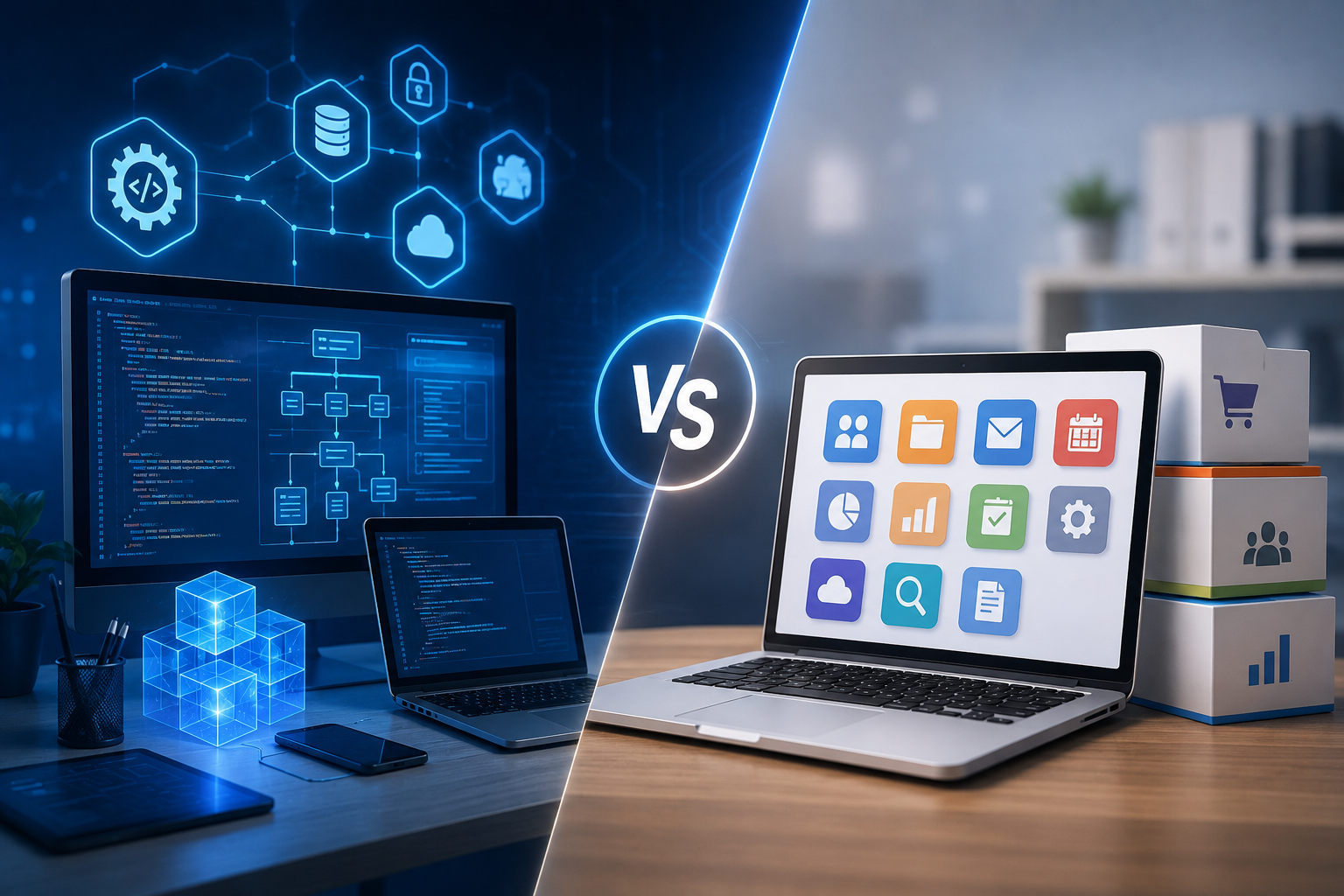
Custom Software vs Off-the-Shelf Software: Which is Better?
IntroductionChoosing the right software is one of the most important technology decisions a business can make. Whether you are a startup, a growing enterprise, or an established organization, the software you use directly impacts productivity, efficiency, customer satisfaction, and long-term growth.Businesses today generally have two options: Custom Software developed specifically for their unique requirements, or Off-the-Shelf Software, which is pre-built and designed to serve a broad range of users. While both options have their strengths, selecting the right solution depends on your business goals, budget, scalability needs, and operational complexity.This article explores the differences between custom software and off-the-shelf software, their advantages and disadvantages, and how to determine which solution is best suited for your organization. What is Custom Software?Custom software is a solution specifically designed, developed, and maintained to meet the unique requirements of a particular organization. Unlike generic software products, custom applications are built around your business processes, workflows, and objectives.Examples include:Enterprise Resource Planning (ERP) systemsCustomer Relationship Management (CRM) platformsInventory Management SystemsHospital Management SystemsLearning Management SystemsE-commerce platformsMobile applicationsBusiness automation toolsCustom software evolves alongside your business and can be enhanced as your requirements change. What is Off-the-Shelf Software?Off-the-shelf software is a ready-made application developed for a wide audience and sold to multiple customers. These solutions are immediately available and often include standard features that meet common business needs.Popular examples include:Microsoft OfficeGoogle WorkspaceAdobe Creative CloudQuickBooksZoomSlackTrelloShopifyThese products are typically subscription-based or licensed and can be deployed quickly with minimal customization. Key Differences Between Custom Software and Off-the-Shelf SoftwareFeatureCustom SoftwareOff-the-Shelf SoftwareDevelopmentBuilt specifically for one businessDeveloped for a broad marketCostHigher initial investmentLower upfront costImplementationTakes longer to developReady to use immediatelyCustomizationFully customizableLimited customizationScalabilityHighly scalableDepends on vendor capabilitiesIntegrationDesigned to integrate with existing systemsMay require additional connectors or workaroundsOwnershipOwned by the business (depending on the agreement)Owned by the software vendorCompetitive AdvantageProvides unique business capabilitiesAvailable to competitors as wellMaintenanceManaged by the development team or businessManaged by the software vendor Advantages of Custom Software1. Tailored to Your Business NeedsEvery organization has unique workflows and operational requirements. Custom software is designed specifically to support these processes, eliminating unnecessary features while providing exactly what your business needs. 2. Greater FlexibilityCustom software can easily adapt as your business grows.You can:Add new modulesExpand functionalityIntegrate new technologiesModify workflowsSupport changing business requirementsThis flexibility makes custom software ideal for organizations planning long-term growth. 3. Better IntegrationBusinesses often use multiple applications for accounting, CRM, inventory, HR, and customer support.Custom software can seamlessly integrate with:ERP systemsPayment gatewaysCloud platformsAPIsIoT devicesAI-powered applicationsBusiness Intelligence toolsThis reduces manual work and improves operational efficiency. 4. Improved SecuritySince custom software is built specifically for your organization, it offers greater control over security policies.Organizations can implement:Role-based access controlMulti-factor authenticationData encryptionAudit loggingSecure APIsCompliance requirementsCustom software reduces exposure to vulnerabilities commonly targeted in widely used commercial applications. 5. Competitive AdvantageCustom software enables businesses to develop unique capabilities that competitors using standard software cannot easily replicate.Examples include:Personalized customer experiencesAutomated workflowsAI-driven recommendationsIndustry-specific functionalityUnique reporting systemsThese features can improve efficiency and create long-term business differentiation. Disadvantages of Custom SoftwareDespite its benefits, custom software also has certain challenges.Higher Initial CostCustom development requires investment in planning, design, development, testing, deployment, and maintenance.Longer Development TimeDepending on complexity, development may take several weeks or months before deployment.Ongoing MaintenanceThe organization or development partner is responsible for updates, bug fixes, security patches, and future enhancements. Advantages of Off-the-Shelf Software1. Lower Initial InvestmentReady-made software generally requires a lower upfront investment compared to custom development.Most vendors offer:Monthly subscriptionsAnnual licensesCloud-based pricingPay-as-you-go modelsThis makes it attractive for startups and small businesses. 2. Quick DeploymentBusinesses can begin using off-the-shelf software almost immediately after purchase.There is no lengthy development process, allowing organizations to improve productivity quickly. 3. Vendor SupportMost commercial software providers offer:Technical supportRegular updatesSecurity patchesDocumentationTraining resourcesThis reduces the burden on internal IT teams. 4. Proven ReliabilityPopular software products have been tested by thousands or millions of users.This often results in:Stable performanceMature featuresExtensive documentationLarge user communities Disadvantages of Off-the-Shelf SoftwareLimited CustomizationBusinesses may need to change their workflows to fit the software instead of the software adapting to the business. Unnecessary FeaturesCommercial software often includes features that organizations never use, increasing complexity and reducing efficiency. Subscription CostsAlthough initial costs are lower, recurring subscription fees can become expensive over time, especially for growing organizations. Vendor DependencyBusinesses depend on vendors for:PricingFeature updatesProduct availabilityTechnical supportLicensing policiesUnexpected changes can affect operations. When Should You Choose Custom Software?Custom software is the best choice when:Your business has unique workflows.Competitive differentiation is important.You need advanced security and compliance.Existing software cannot meet your requirements.Long-term scalability is a priority.Multiple system integrations are required.You want complete control over features and future development. When Should You Choose Off-the-Shelf Software?Off-the-shelf software is suitable when:Your requirements are standard.You have limited development budgets.Quick implementation is essential.Minimal customization is acceptable.Vendor support is preferred.The software addresses common business needs effectively. Cost ComparisonCustom SoftwareInitial Cost: HighRecurring Cost: Moderate (maintenance and upgrades)Long-Term Value: High due to ownership, scalability, and tailored functionality.Off-the-Shelf SoftwareInitial Cost: LowRecurring Cost: Monthly or annual subscription feesLong-Term Value: Varies depending on licensing, customization limits, and business growth.Over several years, subscription costs for commercial software may equal or exceed the investment required for a custom solution. Future Trends in Business SoftwareThe software landscape continues to evolve with emerging technologies such as:Artificial Intelligence (AI)Machine LearningCloud-native applicationsLow-code and no-code platformsRobotic Process Automation (RPA)Internet of Things (IoT)Blockchain integrationPredictive analyticsGenerative AI assistantsModern custom software increasingly incorporates these technologies to deliver intelligent automation and personalized user experiences. How TEQZen Can HelpAt TEQZen, we specialize in designing and developing secure, scalable, and high-performance software solutions tailored to your business objectives. Our expertise includes:Custom Software DevelopmentWeb Application DevelopmentMobile App DevelopmentEnterprise Software SolutionsCloud Application DevelopmentAI and Machine Learning IntegrationAPI Development and IntegrationBusiness Process AutomationSoftware ModernizationOngoing Maintenance and SupportWhether you need a completely custom platform or guidance on selecting the right software solution, our team works closely with you to build technology that drives measurable business outcomes. ConclusionBoth custom software and off-the-shelf software have their place in today's business environment. Off-the-shelf solutions are ideal for organizations seeking quick deployment, lower upfront costs, and standardized functionality. In contrast, custom software provides unmatched flexibility, scalability, integration capabilities, and long-term strategic value.The right choice depends on your organization's size, goals, budget, and operational needs. If your business relies on unique workflows, requires seamless integration, or aims to gain a competitive edge, investing in custom software can deliver significant returns over time.By carefully evaluating your current challenges and future growth plans, you can select a software solution that not only meets today's requirements but also supports tomorrow's success. Frequently Asked Questions (FAQs)1. Is custom software more secure than off-the-shelf software?Custom software often offers enhanced security because it is designed specifically for your organization, allowing tailored security controls and compliance measures.2. Is off-the-shelf software suitable for startups?Yes. Startups with standard business needs and limited budgets often benefit from the quick deployment and lower initial cost of off-the-shelf software.3. Can custom software integrate with existing systems?Yes. One of the biggest advantages of custom software is its ability to integrate seamlessly with ERP systems, CRMs, payment gateways, cloud platforms, and third-party APIs.4. Which option is more cost-effective in the long run?While custom software typically requires a higher initial investment, it can provide better long-term value by eliminating recurring licensing fees and adapting to evolving business needs.5. How long does custom software development take?The timeline depends on the project's complexity, features, and scope. Small applications may take a few weeks, while enterprise-grade solutions can take several months.
Explore Hub
Sep 01, 2026

10 Essential Features Every Modern Business Website Needs
IntroductionIn today's digital-first world, a business website is much more than an online brochure—it is the foundation of your brand's digital presence. Whether you operate a startup, a small business, or a large enterprise, your website often serves as the first interaction potential customers have with your business. A professionally designed website builds trust, generates leads, supports customer engagement, and drives business growth.Modern users expect websites to be fast, secure, responsive, and easy to navigate. Search engines also prioritize websites that provide excellent user experiences, making website quality a critical factor for online visibility and success.In this article, we explore the 10 essential features every modern business website should include to remain competitive, improve customer satisfaction, and achieve long-term digital success. Why Your Business Website MattersA well-designed website can help your business:Build credibility and trustGenerate qualified leadsIncrease online visibilityImprove customer engagementShowcase products and servicesSupport digital marketing campaignsEnhance customer supportIncrease sales and conversionsWithout a modern website, businesses risk losing potential customers to competitors who provide a better online experience. 1. Responsive Mobile-Friendly DesignMore than half of all web traffic now comes from smartphones and tablets. A responsive website automatically adjusts its layout and functionality to provide an optimal viewing experience across desktops, laptops, tablets, and mobile devices.BenefitsImproved user experienceBetter Google search rankingsIncreased mobile conversionsLower bounce ratesConsistent branding across devicesA responsive design ensures visitors can easily browse your website regardless of screen size. 2. Fast Loading SpeedWebsite speed directly impacts user satisfaction and search engine rankings. Visitors expect pages to load within a few seconds, and delays often result in abandoned visits and lost opportunities.Ways to Improve SpeedOptimize imagesMinify CSS and JavaScript filesEnable browser cachingUse Content Delivery Networks (CDNs)Implement lazy loadingChoose reliable web hostingA faster website keeps users engaged and improves conversion rates. 3. User-Friendly NavigationVisitors should be able to find the information they need quickly and easily. A clear navigation structure improves usability and encourages users to explore more pages.Best PracticesSimple navigation menuLogical page hierarchySearch functionalityBreadcrumb navigationClear page categoriesConsistent layoutGood navigation reduces frustration and improves the overall browsing experience. 4. Strong Security FeaturesCybersecurity is a top priority for modern websites. Customers expect their personal information to remain secure during online interactions.Essential Security MeasuresSSL certificate (HTTPS)Secure login systemsRegular software updatesFirewall protectionMalware scanningData encryptionMulti-factor authentication for administratorsAutomated backupsA secure website protects both your business and your customers while improving trust. 5. Search Engine Optimization (SEO)Even the most attractive website has limited value if potential customers cannot find it online. SEO helps improve visibility in search engine results and drives organic traffic.Essential SEO ElementsOptimized page titlesMeta descriptionsStructured headings (H1, H2, H3)Image alt textXML sitemapClean URLsInternal linkingSchema markupMobile optimizationA well-optimized website attracts more visitors without relying solely on paid advertising. 6. Clear Call-to-Action (CTA)Every business website should guide visitors toward meaningful actions, whether it's making a purchase, requesting a quote, scheduling a consultation, or contacting the business.Effective CTAs IncludeGet a Free QuoteContact UsBook a DemoSchedule a ConsultationStart Your ProjectDownload Our BrochureSubscribe to Our NewsletterStrategically placed CTAs help convert visitors into customers. 7. High-Quality ContentContent plays a vital role in educating visitors, building trust, and improving search engine rankings. Your website should provide valuable, relevant, and up-to-date information.Important Content PagesHomeAbout UsServicesProductsBlogCase StudiesTestimonialsFAQsContact UsPrivacy PolicyRegularly publishing informative blog articles also helps establish your business as an industry authority. 8. Contact Information and Inquiry FormsVisitors should never struggle to contact your business. Make it easy for customers to reach you through multiple communication channels.IncludeContact formsPhone numbersEmail addressesOffice locationInteractive mapsBusiness hoursLive chatSocial media linksProviding multiple contact options increases customer confidence and improves lead generation. 9. Social Proof and Customer TestimonialsPeople trust businesses that have positive reviews and proven success stories. Displaying testimonials and client achievements helps build credibility.Examples of Social ProofCustomer reviewsClient testimonialsCase studiesPortfolioAwards and certificationsPartner logosIndustry recognitionSuccess metricsAuthentic social proof reassures potential customers that your business delivers quality results. 10. Analytics and Performance TrackingUnderstanding visitor behavior allows businesses to continuously improve website performance and marketing effectiveness.Useful Analytics ToolsGoogle AnalyticsGoogle Search ConsoleHeatmapsConversion trackingUser session recordingsPerformance monitoringTracking metrics such as traffic sources, user engagement, bounce rates, and conversion rates helps optimize your website over time. Bonus Features for a Competitive Business WebsiteBeyond the essential features, consider adding:AI-powered chatbotsPersonalized content recommendationsCustomer portalsOnline booking systemsE-commerce functionalityNewsletter subscription formsMultilingual supportAccessibility featuresProgressive Web App (PWA) capabilitiesIntegration with CRM and ERP systemsThese enhancements improve user engagement and support long-term business growth. Common Mistakes to AvoidMany business websites fail to achieve their goals because of avoidable issues such as:Slow loading pagesOutdated designPoor mobile experienceBroken linksWeak securityComplicated navigationLack of clear CTAsThin or outdated contentIgnoring SEO best practicesInfrequent updatesRegular maintenance and optimization help ensure your website continues to perform effectively. How TEQZen Builds Modern Business WebsitesAt TEQZen, we create professional, secure, and scalable websites tailored to meet the unique needs of businesses across industries. Our web development services include:Custom Website DevelopmentResponsive Web DesignE-Commerce SolutionsContent Management Systems (CMS)Search Engine Optimization (SEO)Website Speed OptimizationUI/UX DesignWeb Application DevelopmentAPI IntegrationWebsite Maintenance and SupportOur focus is on delivering websites that not only look great but also drive measurable business results through performance, usability, and security. ConclusionA modern business website is one of the most valuable investments an organization can make. It serves as your digital storefront, marketing platform, customer service hub, and lead generation engine. By incorporating responsive design, fast performance, strong security, effective SEO, clear navigation, compelling content, and conversion-focused features, businesses can create a website that attracts visitors, builds trust, and drives sustainable growth.As technology and customer expectations continue to evolve, regularly updating and optimizing your website ensures it remains competitive and aligned with your business objectives. Whether you're launching a new website or upgrading an existing one, focusing on these ten essential features will help create a strong online presence that supports long-term success.
Explore Hub
Sep 01, 2026

Cloud Computing Explained: Benefits for Growing Businesses
IntroductionIn today's fast-paced digital economy, businesses need technology that is flexible, scalable, secure, and cost-effective. Traditional IT infrastructure often requires significant investments in hardware, software, maintenance, and dedicated IT staff, making it difficult for growing businesses to scale efficiently.Cloud computing has revolutionized the way organizations access and manage technology. Instead of purchasing and maintaining physical servers, businesses can use cloud-based services to store data, run applications, collaborate remotely, and scale operations with minimal upfront investment.From startups and small businesses to multinational enterprises, cloud computing has become a cornerstone of digital transformation. This article explains what cloud computing is, how it works, its key deployment models, and the major benefits it offers to growing businesses. What is Cloud Computing?Cloud computing is the delivery of computing services—including servers, storage, databases, networking, software, analytics, and artificial intelligence—over the internet. Instead of hosting applications and data on local computers or on-premises servers, organizations can access these resources on demand through cloud service providers.Users simply connect to the internet to access computing resources whenever needed, paying only for the services they use.Common cloud services include:Cloud storageVirtual serversDatabasesWeb hostingSoftware applicationsArtificial Intelligence servicesBackup and disaster recoveryData analyticsMachine learning platformsCloud computing eliminates many of the limitations associated with traditional IT infrastructure while improving flexibility and business agility. How Cloud Computing WorksCloud providers maintain large networks of data centers equipped with powerful servers, storage systems, and networking infrastructure. Businesses connect to these resources through secure internet connections, allowing employees to access applications and data from virtually anywhere.The cloud service provider is responsible for:Hardware maintenanceSoftware updatesSecurity monitoringInfrastructure managementSystem availabilityBackup and disaster recoveryThis enables businesses to focus on innovation and core operations instead of managing complex IT environments. Types of Cloud ComputingPublic CloudPublic cloud services are owned and operated by third-party providers. Multiple organizations share the underlying infrastructure while maintaining secure separation of their data.Best suited for:StartupsSmall businessesWeb applicationsDevelopment environments Private CloudPrivate cloud environments are dedicated to a single organization, providing greater control, customization, and security.Ideal for:Financial institutionsHealthcare organizationsGovernment agenciesLarge enterprises Hybrid CloudHybrid cloud combines public and private cloud environments, allowing businesses to store sensitive data privately while using public cloud resources for scalability and flexibility.This approach offers the best balance between performance, security, and cost. Cloud Service ModelsInfrastructure as a Service (IaaS)Provides virtual servers, storage, networking, and computing resources.Examples of use cases include:Hosting websitesVirtual machinesDevelopment environmentsDisaster recovery Platform as a Service (PaaS)Provides a complete development platform where developers can build, test, and deploy applications without managing underlying infrastructure.Benefits include:Faster developmentSimplified deploymentIntegrated development tools Software as a Service (SaaS)Software applications are delivered through the cloud and accessed using a web browser.Common SaaS applications include:Email platformsCustomer Relationship Management (CRM)Office productivity toolsAccounting softwareProject management applications Top Benefits of Cloud Computing for Growing Businesses1. Lower IT CostsCloud computing significantly reduces capital expenditure by eliminating the need to purchase expensive servers, networking equipment, and software licenses.Businesses also save on:Hardware maintenanceData center costsElectricityCooling systemsIT administrationThe pay-as-you-go model allows organizations to pay only for the resources they use. 2. ScalabilityBusiness growth often requires additional computing resources. Cloud computing enables organizations to quickly scale storage, processing power, and applications without investing in new hardware.Businesses can:Add users instantlyExpand storage capacityIncrease computing powerHandle seasonal traffic spikesThis flexibility supports long-term growth while minimizing costs. 3. Improved AccessibilityCloud-based applications can be accessed securely from anywhere with an internet connection.Employees can work from:HomeOfficeClient locationsRemote branchesMobile devicesThis enables hybrid work environments and improves collaboration across distributed teams. 4. Enhanced CollaborationCloud platforms allow teams to collaborate in real time by sharing documents, applications, and project information.Features include:Real-time editingFile sharingVideo conferencingProject collaborationVersion controlThese capabilities improve productivity and reduce communication delays. 5. Better Data SecurityLeading cloud providers invest heavily in advanced security technologies.Security features often include:Data encryptionIdentity and access managementMulti-Factor Authentication (MFA)Firewall protectionContinuous monitoringThreat detectionSecurity updatesBusinesses also benefit from compliance with international security standards. 6. Disaster Recovery and BackupUnexpected events such as hardware failures, cyberattacks, or natural disasters can disrupt business operations.Cloud computing supports business continuity through:Automated backupsData replicationRapid disaster recoveryHigh system availabilityThis minimizes downtime and protects critical business information. 7. Faster InnovationCloud platforms provide instant access to advanced technologies such as:Artificial IntelligenceMachine LearningData AnalyticsInternet of Things (IoT)Blockchain servicesServerless computingBusinesses can experiment, innovate, and launch new products more quickly without major infrastructure investments. 8. Automatic UpdatesCloud providers regularly update infrastructure and software with:Security patchesPerformance improvementsNew featuresBug fixesOrganizations always have access to the latest technologies without manual upgrades. 9. Business AgilityCloud computing enables organizations to respond rapidly to changing market conditions.Businesses can:Launch new services fasterExpand into new marketsSupport remote teamsDeploy applications globallyImprove customer experiencesThis agility helps organizations remain competitive in rapidly evolving industries. 10. Environmental SustainabilityCloud providers optimize energy usage through highly efficient data centers.Benefits include:Reduced energy consumptionLower carbon footprintImproved resource utilizationSustainable IT operationsCloud adoption contributes to greener business practices. Industries Benefiting from Cloud ComputingCloud technology supports organizations across numerous industries.HealthcareElectronic health recordsTelemedicineMedical imagingPatient managementBanking and FinanceSecure transactionsFraud detectionRisk managementDigital bankingEducationOnline learningStudent management systemsVirtual classroomsResearch collaborationManufacturingSmart factoriesSupply chain managementPredictive maintenanceIoT integrationRetail and E-CommerceOnline storesInventory managementCustomer analyticsPersonalized shopping experiences Common ChallengesAlthough cloud computing offers significant benefits, businesses should consider several challenges.Data PrivacyOrganizations must ensure compliance with regulations governing the storage and processing of sensitive information.Internet DependencyReliable internet connectivity is essential for accessing cloud-based services.Vendor Lock-InMigrating between cloud providers may require careful planning to avoid compatibility issues.Security ManagementBusinesses remain responsible for managing user access, authentication, and secure application development. Best Practices for Cloud AdoptionTo maximize the benefits of cloud computing:Assess your business requirements.Select the appropriate cloud deployment model.Choose a reputable cloud service provider.Implement strong identity and access management.Encrypt sensitive business data.Enable Multi-Factor Authentication (MFA).Develop backup and disaster recovery plans.Continuously monitor cloud security.Train employees on cloud security best practices.Regularly optimize cloud resource usage.A well-planned cloud strategy ensures long-term success and cost efficiency. How TEQZen Helps Businesses Adopt Cloud TechnologyAt TEQZen, we help organizations leverage cloud computing to improve agility, scalability, and operational efficiency. Our cloud services include:Cloud ConsultingCloud MigrationCloud Infrastructure DesignWeb Application HostingCloud Security SolutionsBackup and Disaster RecoveryDevOps and CI/CD ImplementationCloud Cost OptimizationManaged Cloud ServicesOngoing Technical SupportOur experts design secure and scalable cloud environments that align with your business goals and future growth. ConclusionCloud computing has transformed the way businesses operate by providing flexible, scalable, and cost-effective access to powerful technology resources. Whether you are a startup looking to reduce infrastructure costs or a growing enterprise seeking greater agility, cloud computing offers the tools needed to innovate, collaborate, and expand efficiently.By adopting cloud technologies, organizations can improve productivity, enhance security, support remote work, accelerate digital transformation, and remain competitive in an increasingly connected world. As technology continues to evolve, cloud computing will remain a critical foundation for sustainable business growth and innovation.
Explore Hub
Sep 01, 2026

Top Cybersecurity Threats Businesses Face in 2026
IntroductionAs businesses continue to embrace digital transformation, cloud computing, artificial intelligence (AI), and remote work, cybersecurity has become more critical than ever. In 2026, cybercriminals are leveraging advanced technologies, including AI-powered attack tools, automated malware, and sophisticated social engineering techniques, to target organizations of every size.Cyberattacks no longer affect only large enterprises. Small and medium-sized businesses (SMBs), startups, educational institutions, healthcare organizations, financial services, and government agencies are increasingly becoming attractive targets due to limited security resources and valuable digital assets.Understanding today's cybersecurity landscape is the first step toward protecting your organization. This article explores the top cybersecurity threats businesses face in 2026, their potential impact, and practical strategies to strengthen your organization's security posture. Why Cybersecurity Matters in 2026Modern businesses rely heavily on digital infrastructure, cloud platforms, connected devices, and online services. While these technologies improve efficiency and innovation, they also increase the attack surface for cybercriminals.A successful cyberattack can lead to:Financial lossesOperational downtimeData breachesRegulatory penaltiesReputation damageLoss of customer trustIntellectual property theftBusiness disruptionInvesting in cybersecurity is no longer optional—it is a business necessity. Top Cybersecurity Threats in 20261. AI-Powered CyberattacksArtificial Intelligence is transforming both cybersecurity defenses and cyberattacks. Attackers are using AI to automate phishing campaigns, identify system vulnerabilities, bypass traditional security tools, and create highly convincing social engineering attacks.Common AI-driven attacks include:Automated phishing emailsAI-generated malwarePassword guessingIntelligent vulnerability scanningDeepfake voice and video attacksBusinesses must adopt AI-powered security solutions capable of detecting evolving threats in real time. 2. Ransomware AttacksRansomware remains one of the most damaging cybersecurity threats. Attackers encrypt business data and demand payment in exchange for restoring access.Modern ransomware groups often:Steal sensitive data before encryptionThreaten public data leaksTarget cloud backupsAttack supply chainsDisrupt critical business operationsPrevention TipsMaintain offline backupsKeep systems updatedUse endpoint protectionTrain employeesImplement Zero Trust security 3. Phishing and Social EngineeringCybercriminals continue to exploit human error through deceptive emails, text messages, fake websites, and phone calls.Common phishing techniques include:Business Email Compromise (BEC)Fake invoice scamsCredential harvestingQR code phishing (Quishing)Spear phishingCEO fraudRegular cybersecurity awareness training significantly reduces phishing risks. 4. Cloud Security MisconfigurationsAs organizations migrate workloads to the cloud, improperly configured cloud environments have become a leading cause of data breaches.Common issues include:Publicly exposed storage bucketsWeak access controlsMisconfigured firewallsInsecure APIsExcessive user permissionsRegular cloud security audits help identify and correct these vulnerabilities. 5. Insider ThreatsNot every cyber threat comes from outside the organization. Employees, contractors, and business partners may unintentionally or intentionally compromise sensitive information.Examples include:Accidental data leaksUnauthorized file sharingPrivilege misuseStolen credentialsMalicious insidersRole-based access controls and continuous monitoring reduce insider risks. 6. Supply Chain AttacksOrganizations increasingly depend on third-party vendors, software providers, and cloud services. Attackers exploit vulnerabilities within trusted suppliers to gain access to larger targets.Examples include:Compromised software updatesThird-party application vulnerabilitiesVendor credential theftOpen-source dependency attacksBusinesses should regularly assess the cybersecurity posture of their vendors and partners. 7. Internet of Things (IoT) VulnerabilitiesConnected devices such as smart cameras, industrial sensors, healthcare equipment, and manufacturing systems often have limited built-in security.Common IoT risks include:Default passwordsOutdated firmwareWeak encryptionDevice hijackingBotnet attacksOrganizations should secure IoT devices through network segmentation, firmware updates, and strong authentication. 8. Deepfake and Identity FraudAdvancements in generative AI have made deepfake audio and video increasingly convincing. Attackers can impersonate executives, employees, or trusted partners to manipulate financial transactions or access sensitive systems.Businesses should verify unusual requests using multiple communication channels and strengthen identity verification processes. 9. API Security ThreatsModern applications rely heavily on APIs to exchange information. Poorly secured APIs can expose sensitive data or allow unauthorized access.Common API risks include:Broken authenticationExcessive data exposureInjection attacksRate-limit bypassInsecure endpointsRegular API testing and authentication controls help mitigate these risks. 10. Credential Theft and Password AttacksWeak or reused passwords remain one of the easiest ways for attackers to gain unauthorized access.Common techniques include:Credential stuffingPassword sprayingBrute-force attacksKeyloggingSession hijackingBusinesses should enforce:Strong password policiesPassword managersMulti-Factor Authentication (MFA)Identity monitoring Emerging Cybersecurity TrendsSeveral trends are reshaping cybersecurity in 2026:Zero Trust ArchitectureOrganizations increasingly verify every user, device, and application before granting access, regardless of location.AI-Powered Threat DetectionMachine learning enables faster detection of unusual behavior and suspicious activities across networks.Extended Detection and Response (XDR)XDR platforms combine endpoint, network, cloud, and identity monitoring into a unified security solution.Security AutomationAutomated incident response reduces reaction time and minimizes damage during cyber incidents.Privacy-First SecurityBusinesses are strengthening data governance to comply with evolving privacy regulations and customer expectations. Industries Most at RiskWhile every organization faces cybersecurity risks, some sectors are particularly attractive targets.HealthcarePatient recordsMedical devicesHospital networksFinancial ServicesBanking systemsPayment platformsCustomer financial dataManufacturingIndustrial control systemsSmart factoriesSupply chain operationsRetail and E-CommerceCustomer payment informationOnline transactionsLoyalty programsEducationStudent recordsResearch dataLearning platforms Best Practices to Protect Your BusinessBusinesses can significantly reduce cybersecurity risks by implementing the following measures:Conduct regular cybersecurity risk assessments.Enable Multi-Factor Authentication (MFA) across all systems.Keep operating systems and applications updated.Encrypt sensitive business data.Train employees on cybersecurity awareness.Maintain secure offline backups.Monitor networks continuously using Security Information and Event Management (SIEM) tools.Adopt a Zero Trust security model.Secure cloud environments with proper configuration management.Develop and regularly test an incident response and disaster recovery plan. How TEQZen Helps Secure BusinessesAt TEQZen, we provide comprehensive cybersecurity solutions designed to protect organizations from evolving digital threats. Our services include:Cybersecurity ConsultingNetwork Security SolutionsWeb and Application SecurityCloud Security AssessmentVulnerability Assessment and Penetration Testing (VAPT)Endpoint SecurityIdentity and Access Management (IAM)Security Awareness TrainingIncident Response PlanningSecurity Monitoring and Compliance SupportOur proactive approach helps businesses strengthen resilience, reduce risk, and safeguard critical digital assets. ConclusionCybersecurity in 2026 extends far beyond traditional antivirus software and firewalls. Businesses must prepare for AI-powered attacks, ransomware, cloud vulnerabilities, phishing campaigns, insider threats, and increasingly sophisticated identity fraud. As digital transformation accelerates, proactive security strategies become essential for protecting data, maintaining customer trust, and ensuring business continuity.By combining modern security technologies with employee awareness, strong governance, and continuous monitoring, organizations can significantly reduce cyber risks and remain resilient in an ever-changing threat landscape. Investing in cybersecurity today is an investment in your organization's future success.
Explore Hub
Sep 01, 2026